
Solution: Sulfur granules
Jan 14,2026


Application of Z-Type Elevators in Sulfur Granule Conveying—Entirely Made of 304 Stainless Steel with a Dual Explosion-Proof Solution
Sulfur granules (industrial sulfur) are widely used in industries such as chemical manufacturing, rubber production, pesticide formulation, dye synthesis, and sulfuric acid production. Sulfur granules exhibit characteristics such as strong corrosivity, flammability and explosiveness, easy breakage, and sensitivity to moisture, which place extremely stringent demands on the corrosion resistance, explosion-proof performance, and sealing integrity of equipment during transportation. The Z-type elevator, with its core advantages of all-304 stainless steel construction, dual explosion-proof configuration, fully enclosed sealing, and low-breakage conveying, provides a safe, efficient, and environmentally friendly integrated solution for the conveyance of sulfur granules.
---
I. Material Characteristics and Conveying Challenges of Sulfur
Sulfur (industrial-grade sulfur) appears as yellow or pale-yellow granules and is classified as a Class II flammable solid. Its principal physical parameters are as follows:
| Parameter | Value |
|------|------|
| Relative density (water = 1) | Approximately 2.0 |
| Melting Point | 112.8–119.3°C |
| Boiling Point | 444.6°C |
| Autoignition Temperature | Approximately 205–260°C |
| Lower Explosive Limit (Dust) | 2.3–35 g/m³ (values vary considerably across different sources; the more stringent value of 2.3 g/m³ is adopted) |
| Minimum Ignition Energy | Only 0.14 mJ for particle sizes below 70 μm, extremely low |
The corrosivity of sulfur stems from the acidic substances it can generate in humid environments. Although sulfur is insoluble in water, prolonged exposure to moist air leads to slow oxidation, producing sulfur dioxide or sulfuric acid, which severely corrode ordinary carbon-steel equipment. Sulfur dust mixed with air forms an explosive mixture with a very low ignition energy and a low lower explosive limit, making chemical explosion accidents highly likely. Sulfur particles are relatively brittle; during transportation, they can easily fracture into fine powder upon severe impact or compression. Furthermore, friction among sulfur particles or between the material and equipment during conveyance can generate static electricity; if this static charge accumulates and is not promptly dissipated, it may become an ignition source. The autoignition temperature of sulfur particles is approximately 205°C, so measures must be taken during transport to prevent localized overheating of the material.
In light of the aforementioned characteristics, sulfur pellet conveying places specific requirements on the equipment: all components in contact with the material must be made of corrosion-resistant materials (such as 304 stainless steel); the equipment must be equipped with comprehensive explosion-proof features, including explosion-proof motors, anti-static chains, and proper equipment grounding; the conveying process must be fully enclosed to prevent dust leakage and isolate moisture; and a low-damage conveying method must be employed to maintain the integrity of the pellets.
---
II. Equipment Overview
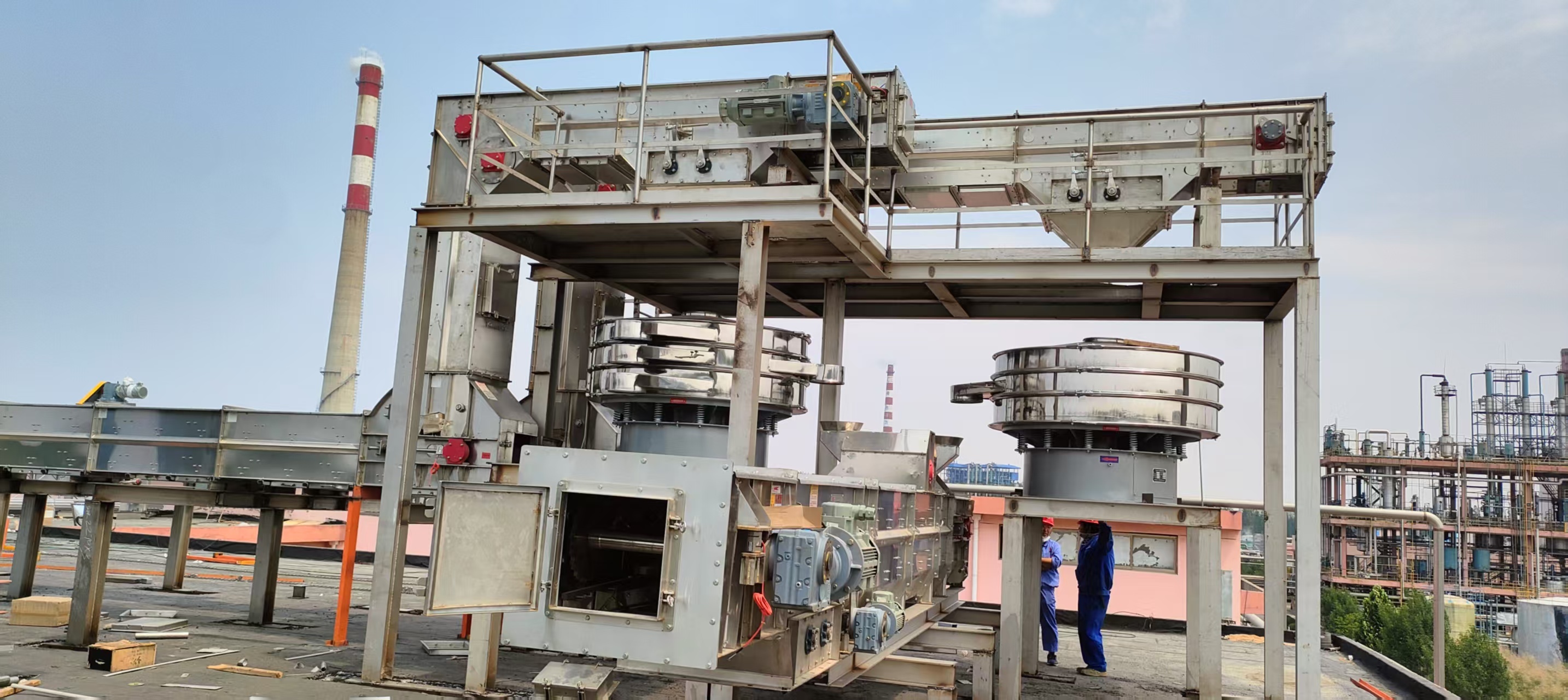
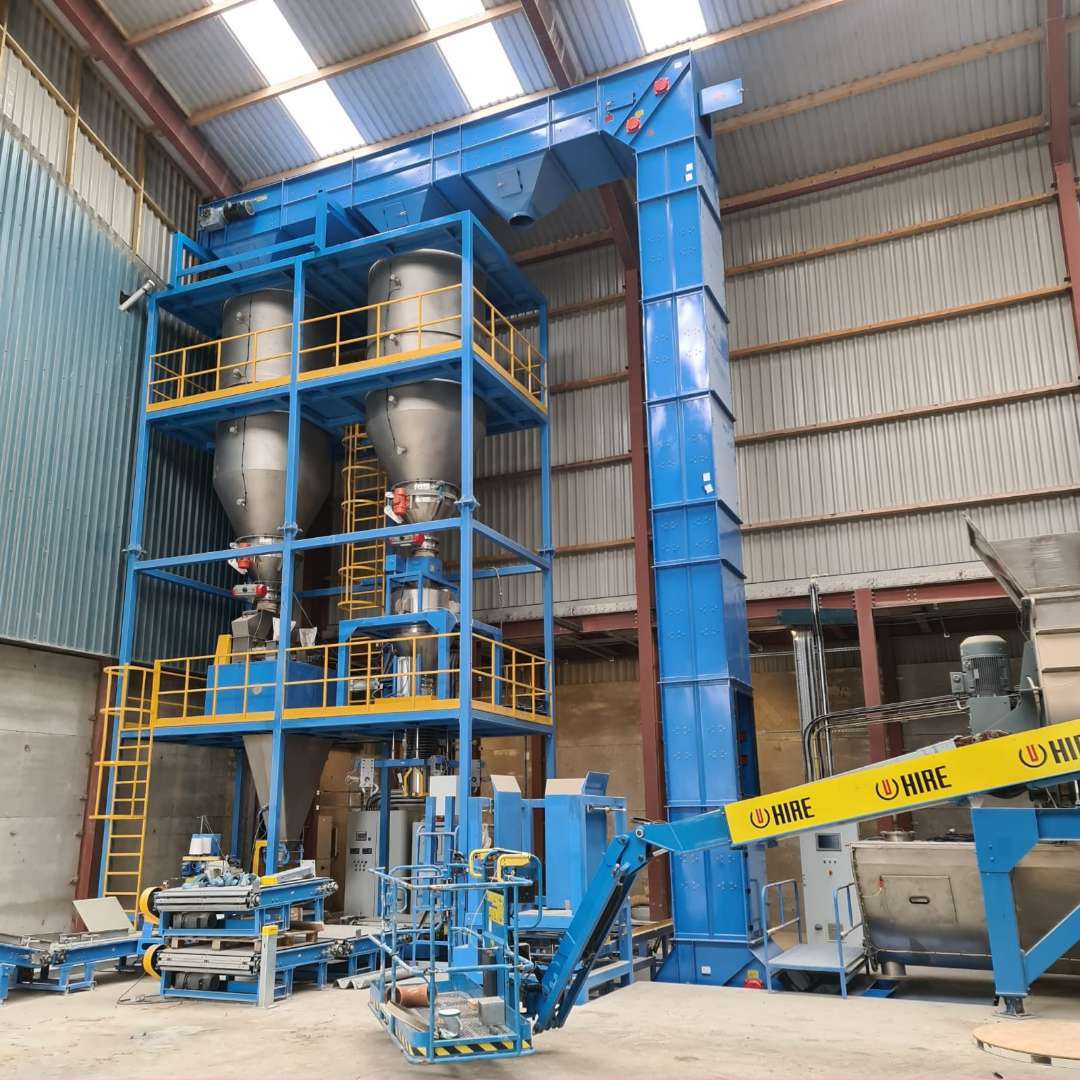
The Z-type bucket elevator (also known as a rotary-bucket elevator) is a continuous conveying device that transports materials within a closed casing by means of buckets suspended from a chain. Its name derives from the characteristic Z-shaped conveying trajectory—horizontal feed, vertical lift, and horizontal discharge—and it can be configured for single- or multi-point feeding, with corresponding single- or multi-point discharging accomplished via a discharge mechanism. The equipment can be arranged in various configurations, including Z-shaped, C-shaped, and hybrid layouts, all of which are fully enclosed to prevent material spillage. It is suitable for conveying a wide range of powdered and granular materials, particularly non-cohesive substances, and is commonly used for feeding weigh-and-pack machines, color-sorting machines, and re-sorting systems, as well as for three-dimensional, cyclical loading and unloading in automated production lines.
---
III. Made entirely of 304 stainless steel—core assurance of corrosion resistance
The core material requirement for sulfur-particle conveying equipment is corrosion resistance. **304 stainless steel** is currently the mainstream material choice for conveying sulfur particles.
**Corrosion Resistance of 304 Stainless Steel**: 304 stainless steel exhibits excellent resistance to acid and alkali corrosion, effectively preventing equipment rust and corrosion in sulfur-handling environments and thereby extending equipment service life. Stainless steels generally offer advantages such as resistance to acids, alkalis, high and low temperatures, wear, and the tendency to cause material contamination; the appropriate grade of stainless steel can be selected based on the specific application. In particular, 304 stainless steel demonstrates good resistance to sulfur and its oxidation products.
**All-Stainless-Steel Construction**: The frame, casing, buckets, chain (or a stainless-steel chain option), inlet, and outlet of the Z-type elevator—all components that come into contact with the material—are fabricated from 304-grade stainless steel. The entire machine is constructed from stainless steel, ensuring that sulfur particles remain uncontaminated during conveyance and that the equipment itself is resistant to corrosion by sulfur.
**Surface Treatment and Cleaning**: The inner wall of the stainless steel component can be mirror-polished to achieve a smooth, burr-free surface, minimizing the adhesion and retention of sulfur particles. This facilitates internal cleaning and maintenance, thereby preventing exacerbated corrosion caused by material buildup and the accumulation of dust. Stainless steel is resistant to temperatures up to 250°C, ensuring stable operation even when conveying freshly granulated sulfur particles that still retain residual heat. Moreover, the equipment is less prone to rusting when used in humid environments.
---
IV. Dual Explosion-Proof Configuration—Ensuring Safe Transportation
Sulfur dust poses an extremely high explosion hazard. The lower explosive limit of sulfur dust is 2.3 g/m³, and it can easily ignite upon contact with open flames, high temperatures (with an autoignition temperature of approximately 205–260°C), or static electricity. Sulfur dust with particle sizes below 70 μm has an autoignition temperature of 220°C and a minimum ignition energy as low as 0.14 mJ, making it the most hazardous in terms of explosion risk; accordingly, the explosion hazard classification for sulfur dust is St3. The sulfur-forming workshop is located in Zone 2 of the explosive gas hazardous environment and Zone 21 of the explosive dust hazardous environment. When conveying flammable dusts such as sulfur powder, explosion-proof motors and static-elimination devices must be used. The Z-type bucket elevator establishes a comprehensive explosion-proof safety system from the following aspects:
**1. Explosion-Proof Motors and Electrical Equipment**: The drive motors and all electrical components (including sensors, control cabinets, etc.) shall be of explosion-proof design in accordance with GB 3836, to prevent electrical sparks from igniting sulfur dust. All electrical components must meet the explosion-proof requirements for Zone 2 in explosive gas atmospheres and for Zone 21 in explosive dust atmospheres.
**2. Electrostatic Dissipation System**: Static electricity is the primary ignition source during sulfur conveying. The entire equipment is reliably grounded, with a grounding resistance of less than 1 Ω, providing a continuous electrical grounding path to prevent the accumulation of static charges. The conveyor chain is made of antistatic, high-strength alloy steel (or all-stainless-steel chain), and the hopper is electrically connected to the chain to promptly dissipate friction-generated static electricity. The entire machine housing may be constructed from conductive materials and equipped with a continuous electrical grounding path.
**3. Fully Enclosed Sealing**: The fully enclosed housing design effectively prevents sulfur dust from escaping, thereby avoiding the accumulation of dust on the equipment’s exterior and the formation of an explosive atmosphere. At the same time, it isolates the interior from external moisture, preventing sulfur from absorbing moisture and caking as well as mitigating acidic corrosion. The inlet and discharge ports are equipped with flexible connectors and dust-collection interfaces, enabling connection to a dust-collection system and maintaining a slight negative pressure inside the equipment.
**4. Pressure Relief Device**: The top of the shell is equipped with a flameless pressure relief device (pressure relief valve). In the event of an accidental dust explosion inside the equipment, the pressure relief valve vents pressure in a controlled direction while extinguishing the flame, thereby preventing the blast wave from propagating to the surrounding area and ensuring the safety of personnel and equipment.
**5. Prevention of Friction-Induced Sparks**: Internal moving components of equipment (such as chains and sprockets) shall be made from spark-free materials or undergo special treatment to prevent sparks caused by friction that could trigger an explosion. During liquid sulfur transfer, the temperature must be maintained within the range of 130–150°C to prevent spontaneous combustion and to avoid reactions triggered by hydrocarbon impurities.
---
V. Fully Enclosed Sealing—Moisture-, Dust-, and Contamination-Proof
The Z-type elevator features a fully enclosed welded housing design, ensuring excellent overall sealing performance:
- During conveyance, no dust is released into the environment, effectively preventing sulfur dust from contaminating the workshop and eliminating the risk of dust accumulation on equipment surfaces that could create an explosive atmosphere.
- The sealed structure isolates external moisture, preventing sulfur particles from absorbing moisture and caking as well as from acidic corrosion, thereby ensuring material quality.
- The inlet and discharge ports are equipped with flexible connectors and dust-collection interfaces, enabling connection to a central dust-collection system to further reduce dust concentrations.
- Configurable nitrogen purging interface for inert gas protection during the conveying process, reducing oxygen levels and fundamentally mitigating the risk of dust explosions.
---
VI. Low-Damage Conveying—Maintaining Particle Integrity
Sulfur particles are highly brittle and tend to fracture during conveyance, generating fine powder. The Z-type bucket elevator employs an inflow feeding method, whereby material naturally slides into the buckets from the feed inlet—rather than being scooped out in the manner of conventional bucket elevators—thereby fundamentally eliminating shear and compression forces on the sulfur particles during the feeding process. While not discharging, the buckets maintain an upward-facing feed inlet and operate at low, steady speeds (linear velocity of 0.1–0.3 m/s), minimizing violent impacts and rolling friction among the sulfur particles. This inflow feeding approach significantly reduces squeezing and collision between moving components and the conveyed material, preventing spillage and the occurrence of “digging” or “scooping” phenomena. Field measurements demonstrate that the breakage rate of sulfur particles during conveyance can be kept at a low level, effectively reducing the generation of fine powder and lowering the risk of dust explosions.
---
VII. Multi-Point Discharge and Integrated Z-Shaped Layout
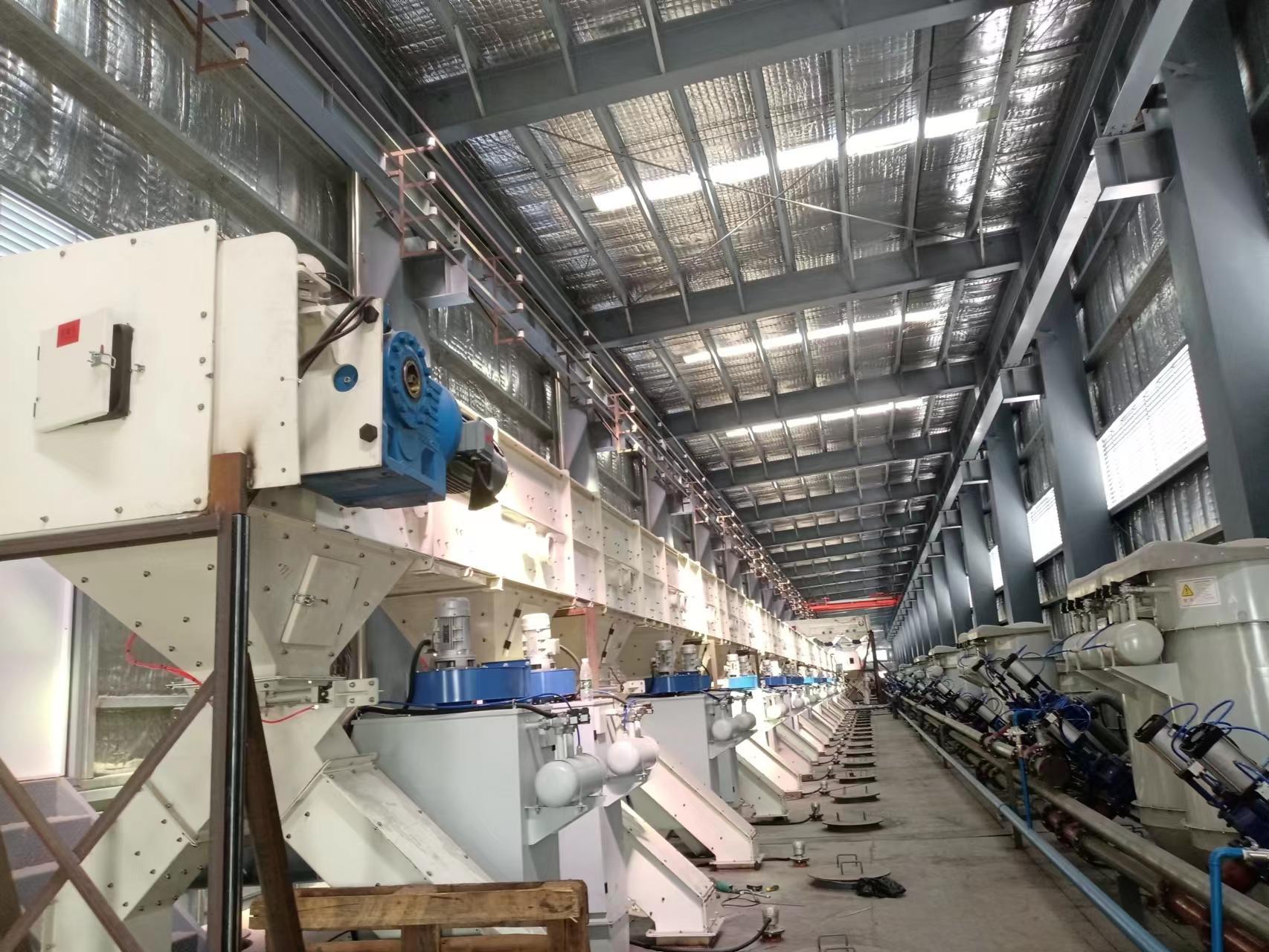
The Z-shaped elevator can be equipped with multiple discharge outlets (2 to 10) along the horizontal discharge section, with each outlet serving a specific packaging machine, hopper, or downstream equipment. Controlled by a PLC, material is fed on demand to the designated discharge outlets, enabling a single unit to serve multiple packaging lines and thereby reducing capital investment and floor space requirements. The Z-shaped configuration integrates horizontal conveying with vertical lifting, resulting in a footprint that is more than 30% smaller compared with the conventional “horizontal belt + vertical bucket elevator” combination. The maximum horizontal conveying distance can reach 100 meters, and the maximum vertical lift height can reach 45 meters, offering flexible adaptation to various plant layouts.
---
VIII. PLC Intelligent Control
The Z-type elevator is equipped with PLC control and variable-frequency drive speed regulation, enabling automatic adjustment of operating speed based on the upstream material feed rate to achieve continuous, balanced conveying. It features standard communication interfaces (such as Modbus RTU/TCP, Profinet, and Profibus-DP) for integration with the plant’s DCS system, supporting remote start/stop, speed setting, material-level monitoring, and fault alarm functions. The system incorporates integrated material-level sensors, anti-blocking switches, motor current monitoring, and temperature monitoring; in the event of an anomaly, it automatically triggers alarms, shuts down, or reverses operation to clear blockages, thereby ensuring uninterrupted production line operation.
---
### IX. Selection Recommendations (for Sulfur Granules Only)
| Configuration Item | Recommended Solution |
|--------|----------|
| **Machine Material** | All 304 stainless steel (including the housing, hopper, chains, and inlet/outlet ports—every component that comes into contact with the material) |
| Casing | Stainless steel 304, 4 mm thick, fully welded and sealed, equipped with a pressure relief valve |
| Sealing Strip | Corrosion-Resistant Fluororubber or Silicone Rubber |
| Chain | Anti-static stainless steel chain or surface-hardened alloy steel chain (with anti-static treatment) |
| Explosion-proof motor | Explosion-proof motor compliant with GB 3836 standard (gas zone 2 + dust zone 21) |
| Pressure-relief device | Flameless pressure-relief valve installed on the shell top |
| Dust Collection Interface | The feed inlet and discharge outlet are equipped with dust collection interfaces for connection to the central dust collection system. |
| Inert Protection (Optional) | Nitrogen Purge Interface, Oxygen Level Monitoring |
| Drive | Variable-frequency motor (depending on the conveying capacity), soft start |
| Control | PLC + HMI touch screen, with DCS communication interface reserved |
---
X. Expected Outcomes
- **Corrosion Resistance and Service Life**: Made entirely of 304 stainless steel, with a service life of 8–10 years or more.
- **Explosion-proof Safety**: Explosion-proof motor, anti-static chain, equipment grounding, pressure-relief valve, and fully enclosed sealing, in compliance with standards such as GB 50058-2014.
- **Dust Control**: Fully enclosed sealing combined with dust extraction interfaces, reducing workshop dust concentrations to low levels.
- **Breakage Rate**: With inflow feeding and low-speed operation, the breakage rate of sulfur particles is significantly reduced.
- **Moisture Resistance**: The sealed structure isolates external moisture, preventing sulfur from absorbing moisture, caking, and corrosion.
- **Automation Level**: PLC–DCS integrated control, enabling unattended operation.
- **Maintenance Costs**: Stainless steel is corrosion-resistant and easy to clean, while the modular design facilitates simple replacement of wear parts.
---
Relevant Cases
Daily Maintenance and Common Faults of High-Temperature Discharge Units

Overview of Z-Type Bucket Elevator Products:
What are the precautions for commissioning a Z-type elevator?
Specializing in the manufacture of elevators for over 20 years.
Hengshui Changhong Mining Machinery Co., Ltd. has been specializing in the manufacture of hoists for over 20 years, integrating technological development, production and operation, and technical services into one. Drafting author of Changhong Z-type (vertical spiral bucket) elevator enterprise standards, patent-technologied manufacturer, reputable producer of mining machinery with superior quality and strength.
Contact Info
Contact: Manager Pang
Phone:8613932836877,8613315840327
Phone:0086-318-4869777
Fax:0086-318-4868277
Email:384023722@qq.com
Address: Mada Development Zone, Fucheng County, Hengshui City, Hebei Province